
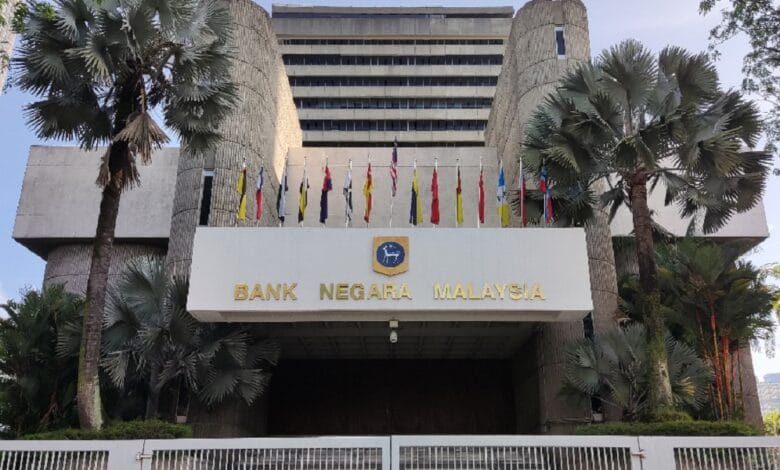
BNM Keeps OPR at 2.75% as Economists See Policy Supporting Malaysia’s Growth

KUALA LUMPUR — Bank Negara Malaysia has decided to maintain the Overnight Policy Rate (OPR) at 2.75 per cent, a move economists say reflects a supportive monetary policy stance amid increasing global uncertainty.
The decision signals the central bank’s cautious approach in balancing economic growth while managing risks stemming from external developments.
Chief Economist of MARC Ratings Bhd, Ray Choy said Malaysia’s economy remains resilient despite ongoing global challenges.
According to him, domestic economic activity continues to expand at a healthy pace while inflation remains relatively moderate.
“The external environment remains the main source of uncertainty, particularly through geopolitical tensions, geoeconomic shifts, energy prices, global financial conditions and evolving trade dynamics,” he explained.
Choy added that even without a change in the policy rate, these external factors could still influence domestic financial conditions through exchange rate movements, funding costs and market expectations.
The decision to maintain the OPR was made during the second of six Monetary Policy Committee (MPC) meetings scheduled for 2026.
Economists believe the move reflects confidence in the current trajectory of Malaysia’s economic performance.
Meanwhile, Chief Economist of MBSB Research, Abdul Mui’zz Morhalim said there is currently no immediate need for the central bank to adjust interest rates.
He noted that Malaysia’s economic growth remains resilient, supported by strong domestic demand and robust exports from the electrical and electronics (E&E) sector.
Inflation has also remained relatively stable, indicating that the current monetary policy stance remains appropriate.
Commenting on the possible economic impact of geopolitical tensions in the Middle East, Abdul Mui’zz said such developments are unlikely to directly influence BNM’s monetary policy decisions at this stage.
However, he noted that if the conflict significantly weakens the global economic outlook, the central bank may consider easing the policy rate to support domestic growth.
Such a move could be necessary if weakening global demand begins to affect Malaysia’s export performance, labour market conditions and domestic consumption.
Abdul Mui’zz emphasised that Malaysia’s economic fundamentals remain strong, supported by steady domestic demand, stable financial conditions and improving fiscal management.
He also highlighted that tourism is expected to play a key role in supporting economic growth, particularly through the national campaign Visit Malaysia 2026.
The campaign is expected to boost tourist arrivals and stimulate various sectors including hospitality, retail and services.
At the same time, Ray Choy warned that the ongoing conflict in the Middle East could have wider implications for the global economy.
He noted that the escalation of tensions has already led to disruptions affecting international logistics and energy markets.
Airspace closures and shipping disruptions in the Strait of Hormuz have resulted in rising logistics costs, higher insurance premiums and increased prices for key commodities such as oil.
These developments could contribute to higher global inflation and weaker consumer sentiment.
Nevertheless, Choy said the impact on Malaysia is expected to be moderated by government measures such as fuel subsidies and price controls on essential food items.
He added that geopolitical risks remain elevated, including the possibility of further conflict escalation and attacks on critical infrastructure.
Moving forward, economists expect BNM’s monetary policy decisions to remain data-driven and focused on supporting domestic economic stability.
As global uncertainties persist, the central bank is likely to maintain a balanced approach aimed at safeguarding Malaysia’s economic growth while managing inflation and financial stability.
-wilayah.com.my