
Mosques Encouraged to Provide Free Meals Daily to Support Community

IPOH — Mosques in Perak have been encouraged to expand their welfare initiatives by providing free meals to the public on a daily basis rather than limiting such assistance to specific seasons such as Ramadan.
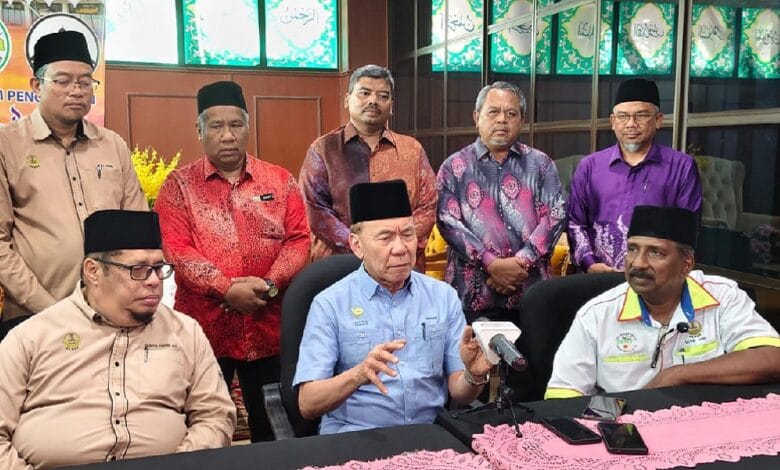
President of the Majlis Agama Islam dan Adat Melayu Perak (MAIPk), Mohd. Annuar Zaini said continuous food assistance programmes could significantly benefit underprivileged groups while strengthening the mosque’s role as a centre for community support.
According to him, providing free meals not only helps those experiencing financial hardship but can also encourage more people to visit and engage with the mosque.
He made the remarks after officiating the Nasi Beriani distribution programme for iftar at Masjid Sultan Idris Shah II.
Mohd. Annuar stressed that assistance for those in need should not be seasonal because people facing economic difficulties require support throughout the year.
He explained that the underprivileged require access to food every day, not just during certain months or festive periods.
For this reason, he urged mosque committees and non-governmental organisations to turn free meal initiatives into regular welfare programmes.
Such efforts, he said, could help strengthen the relationship between mosques and the communities they serve.
Mohd. Annuar noted that some mosques in Ipoh have already implemented similar initiatives.
Several mosques organise food-sharing programmes on Fridays where members of the public contribute dishes in a potluck arrangement.
After Friday prayers, the food is shared among attendees, allowing the wider community to enjoy a meal together.
This initiative enables individuals who may be facing financial difficulties to receive free meals while also promoting a culture of generosity.
According to Mohd. Annuar, community-driven food programmes can help foster a stronger spirit of charity and solidarity among the public.
At the same time, he emphasised that mosque committees should take a more proactive role in organising welfare activities.
Mosques, he said, should serve not only as places of worship but also as centres that provide social assistance to the community.
He also highlighted the growing pressure caused by rising living costs, which has affected many segments of society.
The increasing prices of essential goods have contributed to a larger number of people seeking help to meet their daily needs.
As a result, more individuals have been turning to mosques for food assistance.
This situation is particularly evident at mosques located near universities and higher education institutions.
Mohd. Annuar noted that university students are among those who frequently face financial constraints because they rely on education loans or scholarships.
With limited financial resources, some students hope that donors or charitable groups will sponsor meals for them, especially during the Ramadan fasting period.
He believes that expanding free meal programmes beyond Ramadan would not only help those in need but also strengthen the role of mosques as active centres of community welfare.
-wilayah.com.my